
Planning a trip can be just as thrilling as the journey itself. It’s important to research your destination thoroughly, considering the attractions and budgeting for visits, activities, dining, and more.
The internet has become an indispensable tool for accessing such information from the comfort of your home.
Don’t forget to consult local tourism organizations for their insider tips on the best things to do and places to visit during your stay.
Holiday driving is vastly different from everyday driving to familiar places like work, school, or the shops, where you could almost navigate on autopilot.
Long-distance driving holidays demand careful thought and preparation to ensure safety and minimize disruptions.
Driving in regional, rural, or remote areas necessitates a different mindset. It’s important to recognize that driving for eight hours daily is unlikely without encountering significant risks.
Touring involves dealing with highways, high speeds, traffic, heavy transport, night driving, adverse weather, and wildlife. Each of these factors requires a unique approach and careful attention to ensure you understand and can manage them effectively.
Continue reading below to learn more about these critical concepts and enhance your enjoyment and safety during your travels.
A Careful Driver is a Safe Driver
Proper planning leads to fun, happy and safe travels!
Mobile phones are invaluable tools for adventurers, offering directions, discovering points of interest, communication capabilities, and photography options, among other features.
However, it’s crucial to recognize that mobile phones are not always dependable when traveling outside urban areas. Mobile providers are consistently investing in network enhancements and expanding access for their customers.
Regrettably, these improvements are primarily targeted at “High Density” customers in large cities. This level of service is not typically extended to rural or remote regions.
Mobile phone coverage in rural areas should be expected within a 40 to 50-kilometer radius of towns and cities. It may be completely unavailable in some rural communities.
Your provider’s availability in rural and remote areas should not be assumed. Certain providers cater exclusively to densely populated areas.
While providers strive to ensure sufficient coverage along major highways, significant progress is needed before one can travel from Brisbane to Darwin with consistent and reliable reception. More, unbiased, information on coverage can be found here.
 Satellite phones offer extensive coverage for connectivity across Australia. However, the costs associated with owning and using a satellite phone differ significantly from those of a regular mobile phone.
In terms of reliability, satellite phones can be inconsistent. Despite the considerable costs of ownership and operation, these devices require a direct line of sight to the satellites to function properly.
Therefore, it is not advisable to use them during heavily overcast conditions, under any kind of cover, including car roofs, or near overhanging branches, and sometimes even when close to large buildings or vehicles.
Text messaging is the most cost-effective feature of satellite phones. Sending a text with the necessary information is not only more economical, but texts also tend to transmit and be received more reliably and in a wider range of locations than voice calls.
As the technology advances and improves, more reliable and cost effective solutions are likely to appear in the market.
Starlink™ and other proprietary internet connections may prove more useful in the future.
The UHF Radio uses the 477MHz frequency to provide clear communication without long-distance interference. This radio system can facilitate communication between individuals up to 10 kilometres apart.
The system operates on a line-of-sight basis, meaning the actual distance can be significantly reduced due to local terrain affecting the transmission.
The local nature of the service allows the same channels to be reused by others in nearby geographic areas.
Thus, two or more individuals in a close area can communicate with each other.
This system is the widely accepted standard form of communication on Australian roads and highways.
For more information on owning and using the UHF radio click here to view the Caravan and Camping Industry Association NSW.
Before leaving home or beginning your day’s journey, whether driving, traveling, or walking, ensure you are well-rested and not sleepy, drowsy, or fatigued. This can quickly become a serious and potentially life-threatening issue.
Don’t let the excitement of starting your trip impair your judgment.
It’s advisable to pack your vehicle, attach the caravan, or connect the trailer the day or night before departure. Employing a checklist is also beneficial. It will help you pack, load, and connect everything properly and completely.
The checklist isn’t just a reminder for when you leave home. Use it every day before you set off. Many adventures have been spoiled by forgetting something, or worse, failing to attach or secure something before departure.
Sharing the Road
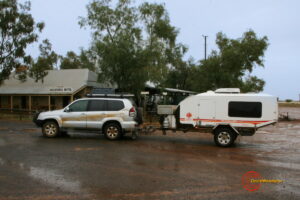
Sharing the road with large, multi-wheeled vehicles necessitates a slight adjustment in our driving habits. It’s crucial to always move as far to the left as possible, allowing them the greatest amount of space on the bitumen. Keep in mind that they can weigh more than 60 times your vehicle’s weight. They don’t stop, accelerate, or maneuver as efficiently as you do.
If you’re uncomfortable with them passing you while driving, it’s safer to pull over completely and let them have the road.
Gravel Road
When traveling in the Australian outback, encountering a road train on a gravel road is inevitable. The safest course of action is to move as far to the left as possible, stop your vehicle, and turn on your headlights. Allow the road train to pass and stay put until your visibility is clear. It’s not un
common for these vehicles to travel in convoys, so be aware that there may be more than one. The lead driver will typically communicate your presence and stationary position to any subsequent vehicles.
Single Lane Bitumen
Similar to a gravel road, it’s recommended to pull over as far to the left as safely possible, allowing the Road Train full access to the bitumen. This reduces the likelihood of the Road Train kicking up rocks and debris from the roadside that could hit your vehicle.
Broken Down
As a motorist in remote areas of Australia there is a very well know custom of MATESHIP.
This simply means we look out for each other. If you see someone that is broken down, or even stopped in the middle of nowhere, you always, at a minimum, slow down and check if they are all OK. If you feel comfortable, stop and ask if they need a hand, or can you contact someone for them when you get back into phone reception.
Mobile Phones are not Reliable
Mobile phone reception in vast areas of Australia is unreliable at best and completely non-existent in others.
Some events are simply a matter of chance, such as the unfortunate occurrence of a flat tire or puncture. This can range from a minor hole from a nail, screw, or other sharp debris on the road, to a total tire blowout due to insufficient air pressure and excessive heat. Additionally, driving on gravel roads presents its own unique set of challenges.
Whatever the cause, you will have to decide whether you are going to carry enough spare tyres to get you out of trouble or are you going to be a fixit person and fix you own flat tyres.
Most car and 4WD accessory stores offer cost-effective tyre puncture repair kits. These kits are straightforward to use and provide a dependable solution for flat tyres. Naturally, you will also require a compressor to reinflate the tyre. Managing this common issue is another aspect to consider during your adventures.
Not all flat tyres can be fixed
There are rules and regulations, read laws, about what can and cannot be repaired. General rule, No Sidewall repairs.
One of, if not, the most significant financial outlays on all road trips is going to be the cost of fuel. Living in a metropolitan area or large rural township with more than one fuel outlet, you might notice some competitor advantage when buying fuel.
Remote locations normally have a single supplier, which might very quickly lead to bowser shock, for some.
Gravel Roads will use more fuel than the smoother bitumen surfaces. The extra, holiday, weight in the vehicle and towing all have an impact on fuel consumption which can change quite drammatically.
Fuel Supplier Location will also play a factor in bowser prices. Back in 2015 in a remote Northern Territory Indigenous community the price of diesel was $2.35 AUD and Opal fuel was $2.30 AUD.
NOTE: It is important to recognise these locations have a very real transportation cost. Some are supplied by road transport and some have to rely on shipping. Both forms of transport are very expensive.
Opal Fuel
A very real problem in remote areas is the dangerous practice of petrol sniffing. To help combat and reduce this, a special blend of petrol has been introduced in communities in Central and Northern Australia.
There is every possibility you will come across a petrol called OPAL. It can be found under various Fuel Company brands in selected communities and major centres, including Alice Springs and Tennant Creek.
Before using this fuel, make sure you check with your Manufacturers recommendation on it’s use.
Click here to learn more about using this fuel. Information provided by RACQ.
Diesel
Diesel is normally available at fuel outlets in remote areas. You do need to be aware though, in some places only “High Flow” pumps are available. You should be careful to ensure your vehicle is compatible with these systems.
Water in the Fuel
You may have heard stories about engine damage caused to diesel engines through water being introduced through contaminated diesel fuel, purchased from a licenced fuel supplier.
In a high number of these cases the water is introduced to the system by condensation. Condensation is also prevalent within the fuel tanks in your vehicle. When the temperature rises, either environmentally or road heat as you travel, small droplets of moisture can form in the fuel tank.
This is normally managed by the water filtration system fitted to all late model vehicles.
Fitting additional water trap filtration systems can help, along with careful consideration on where you source your diesel.
Maintaining maximum levels of fuel in your system may also reduce the potential for problems.
In Australia, every driver knows that trucks are a common sight on our roads. These trucks are crucial to the logistics of our vast and varied country.
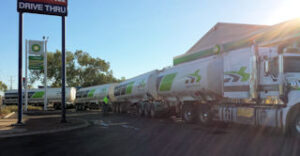 It’s easy to share the road with these large vehicles: just give them space and avoid being in their blind spots. The typical trucks on major highways connecting Brisbane, Sydney, Melbourne, and Adelaide can weigh up to 60 tonnes when fully loaded, which is around 30 times the weight of an average family car.
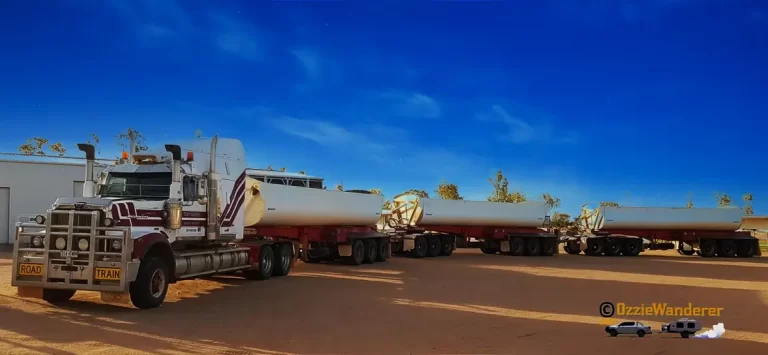
Venture away from the coastal areas into the stunning Australian outback, and you’ll encounter a dramatic change in the size and shape of these trucks. Welcome to the territory of the ROAD TRAIN. True to their name, these vehicles are enormous. Imagine a fuel delivery vehicle in Tennant Creek, Northern Territory, hauling four trailers brimming with fuel.
Such a vehicle can weigh as much as 130 tonnes when fully laden, making it an incredible 60 times heavier than the family car.
And the length? An astounding 53.5 metres, nearly 9 times longer than a medium-sized family car.